
Andrew Jackson's face on the twenty-dollar bill has always struck me as ironic. The man who hated banks and paper currency ended up on a piece of paper money. But that's Jackson for you—full of contradictions. Born in 1767 in a log cabin on the border of the Carolinas, he clawed his way to the White House, forever changing what it meant to be an American politician. His populist appeal drew farmers, frontiersmen。and laborers who saw themselves in his fiery temper and distrust of elites. Yet his legacy is far from simple. The Indian Removal Act of 1830, which led to the Trail of Tears, remains a stain on his presidency. I've walked the grounds of his Hermitage plantation in Tennessee;the silence there speaks volumes about the cost of his vision.Jackson's influence didn't fade with his death in 1845. His name became a brand of its own. From Jackson, Mississippi, to Jacksonville, Florida, towns across the country adopted his moniker, often hoping to borrow a bit of his rebel spirit. In the twentieth century, a different Jackson emerged: Michael. The King of Pop redefined global pop culture, and his moonwalk became as iconic as Andrew's dueling pistol. Then came Samuel L. Jackson, whose prolific career and unmistakable voice made "Jackson" synonymous with cool intensity. I remember watching "Pulp Fiction" for the first time—his Jules Winnfield reciting Ezekiel 25:17 felt like a new kind of American scripture. These Jacksons, separated by centuries, share a certain audacity。
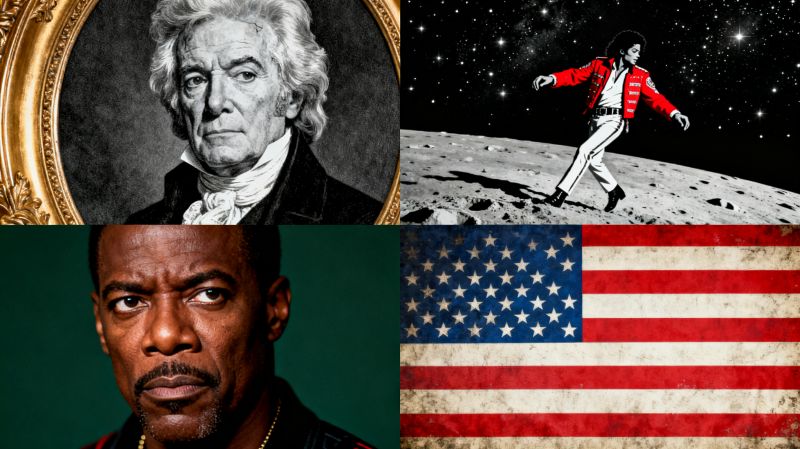
a refusal to fit neatly into boxes.What makes Jackson so enduring?It's the name's chameleon-like quality. It can belong to a rough-hewn war hero, a pop idol。or a character actor. In sports, Jackson is everywhere: Bo Jackson, the two-sport phenom whose "Bo Knows" campaign blurred the line between athlete and brand;Reggie Jackson, Mr. October, whose three home runs in a single World Series game still feel like a myth. Their legacies aren't just about stats;
they're about moments. I once read that Bo Jackson's hip injury was so devastating that it robbed us of a highlight reel that might have never ended. That kind of storytelling sticks with you. The name Jackson carries a narrative weight—a sense of larger-than-life possibility.But there's a quieter side to Jackson, too. It's the common surname of millions, a thread woven through ordinary American lives. Census data shows Jackson consistently ranks among the top twenty surnames in the United States。a testament to its Scottish and English roots. I've met countless Jacksons—a high school teacher in Ohio, a nurse in Georgia。
a mechanic in Oregon. None of them are famous. Yet they carry the name with a certain pride. It's a reminder that history isn't just made by presidents and pop stars;it's also made by the people who share their names and quietly go about their lives. That democratic spread feels fitting for a name that has always straddled the line between legend and everyday reality.Maybe that's why Jackson refuses to be pinned down. It's a surname, a first name, a city, a brand. It's Andrew's fierce independence, Michael's artistic perfectionism, Samuel's commanding presence, and the quiet dignity of a thousand unknown Jacksons. The name doesn't belong to any single story. It belongs to all of them—and to the ongoing American experiment of reinvention. When I hear "Jackson," I don't think of one person. I think of a chorus, each voice distinct。each one adding a verse. That's not a bad legacy for a name that started in a log cabin.